
Lazarus, Home from the War Bibliography

I don’t always cite my sources for novels–in fact, they’re novels, and I think in general I’d prefer not to make it clear where I’ve hewn close to the truth and where I’ve wandered. But I did so much reading for Lazarus, Home from the War, and it touches on so many topics I think people might be somewhat interested in, I thought I might as well give a few options for further reading.

On Buddhism

I spent what felt like half of my academic career studying Buddhism, from the very first semester of my undergraduate life (thank you, Professor Hallisey) to the final moments of my second MA. Some good non-academic introductions to the ideas of Buddhism might be:

Siddhartha, by Hermann Hesse (1922). An imagining of the life of the Buddha. I think this was probably the first thing I read (when I was in my teens!) about Buddhism.

The Empty Mirror: Experiences in a Japanese Zen Monastery, by Janwillem van de Wetering (1971). When it’s the 1950s and you’re in postwar Japan studying Zen and also Gary Snyder is there.

The Snow Leopard, by Peter Matthiessen (1978). When your wife just died and you are a Zen Buddhist and you decide to go to the Himalayas with George Schaller to look for the snow leopard for two months. (Side note: Matthiessen had kids with his wife, the youngest of whom was 8 at the time of their mother’s death. It’s not clear why he gets to go traipsing around Nepal, and they go…where? This has nothing to do with the book, which is wonderful. It’s just always bothered me. Also, Matthiessen was a spy, and later became a monk, making him I think the only monk/spy I’m going to mention in this list.)

But those are all about Buddhism generally or Zen Buddhism, which is Mahayana Buddhism. Laz is a Theravada Buddhist, because he converted in Thailand. These are different sports, although they are played on the same field. (Sorry, I’m not a sports person. Does that…make sense?)

For slightly more academic looks at Buddhism (note that none of these texts is exactly introductory)

World Conqueror and World Renouncer : A Study of Buddhism and Polity in Thailand against a Historical Background, by Stanley J. Tambiah (1976). He’s an anthropologist, so you know it’s gonna be a bad old time. There’s survey data. There’s tables. But there’s also info about how one becomes a monk (in Buddhism, unlike in the West, it can be a temporary commitment, rather than something you sign up to do for the rest of your life.)

The Lovelorn Ghost and the Magical Monk: Practicing Buddhism in Thailand, by Justin Thomas McDaniel (2011). It’s about how modern-day Thai Buddhists practice their religion.

“Buddhism and Conscience: An Exploratory Essay,” by Gananath Obeyesekere. Daedalus, vol. 120, no. 3 Religion and Politics (Summer, 1991), pp. 219–239. Mostly about Col. Henry Steel Olcott, who I find fascinating. I don’t know. This is my bibliography, let me alone. (Olcott: born 1832, became a spiritualist, served in the Civil War, helped investigate Lincoln’s assassination, became a lawyer, helped found the religion of Theosophy, converted to Buddhism along with Madame Blavatsky, moved to Bombay, wound up in Sri Lanka, and developed what is now known as the Buddhist catechism, which was his attempt to educate Westerners in the precepts of Buddhism. He also designed a Buddhist flag, which is still in use today.)

“Attack of the Widow Ghosts: Gender, Death, and Modernity in Northeast Thailand,” by Mary Beth Mills. In Bewitching Women, Pious Men: Gender and Body Politics in Southeast Asia, edited by Aihwa Ong and Michael G Peletz, Berkeley: University of California Press, 1995, pp. 244–273. I don’t know if this is actually helpful, it’s just about using wooden penis votives (among other methods of gender performance) to ward off evil ghosts, and I think that’s kind of neat.

On Judaism

Okay, I actually am Jewish, so I don’t have a lot of elementary texts on this. It’s just my life. Like: Why does Eli not know when Hanukkah is? Because when I didn’t have kids, I always had to look it up, because I didn’t care. (I still don’t care. But now I have to look it up.) But I do have some stuff on dybbuks.

“Appropriating the Golem, Possessing the Dybbuk:  Female Retellings of Jewish Tales,” by Ruth Bienstock Anolik. Modern Language Studies, vol. 31, no. 2 (Autumn 2001): pp. 39–55. https://doi.org/10.2307/3195336

The Dybbuk: The Origins and History of a Concept,” by Morris M. Faierstein. In olam he-zeh v’olam ha-ba: The World and the World to Come in Jewish Belief and Practice, ed. Leonard J. Greenspoon. Purdue University Press, 2017, pp. 135–150. This is an excellent paper.

Jewish Magic and Superstition, by Joshuah Trachtenberg (1939, updated 2023 edition published by Global Grey referenced). Beware: it’s a bummer.

A Dybbuk: and Other Tales of the Supernatural, by Tony Kushner and Joachim Neugroschel (1997). Although the idea of dybbuks is relatively old, the play The Dybbuk by S. Ansky (1914) is really what popularized the idea; it was later made into a movie (in Yiddish) in 1937. Here, Kushner works with Neugroschel’s translation to produce a new English version.

On the Air Force

People who fly airplanes are insane, as far as I can tell. No one has ever looked at an airplane and thought, yes, it would be totally cool to fly that and also been 100% all right. This goes double for fighter jets.

Alone, Unarmed, and Unafraid: Tales of Unarmed Reconnaissance During Vietnam, by Taylor Eubank (2014). There was something weird with my copy, which came from Barnes and Noble’s website. So maybe try Amazon? He has a website, too, with many photos and supplementary information.

Voodoo Warriors, by Group Captain Nigel Walpole (2007). How do you get from someone designing an airplane in their sketchbook through to flying it in a war? 

The Bomber Mafia: A Dream, a Temptation, and the Longest Night of the Second World War, by Malcolm Gladwell (2022). Is it accurate? I don’t know. People had some specific complaints in their Goodreads reviews that I didn’t really understand. But it does really enforce the point about how crazy the guys who founded the Air Force were. Also, it’s not every day I learn a new fact about WWII that makes me blanch, and this had several.

On the Vietnam War

There’s so much out there. These are things I happened upon, mostly because my library happened to have them.

Boots on the Ground: America’s War in Vietnam, by Elizabeth Partridge (2018). TW: Look, most books on the Vietnam War contain graphic descriptions of what it feels like to watch your friends get killed in a violent and arbitrary way, and this is no different. Good context for the war though. Weird that Kennedy comes out looking like a bad guy and Nixon comes out…well, I don’t have anything good to say about him one way or the other, and this book didn’t help.

The Boys of ‘67: Charlie Company’s War in Vietnam, by Andrew Wiest. My biggest reaction to this was I was surpriseed that Wiest hadn’t heard of PTSD by the late 1990s (I think that’s when this book begins). The descriptions of marching through the Vietnamese jungle took me back…not in a great way. Also it’s a collection of oral histories and it made me cry, so.

Voices from the Vietnam War: Stories from American, Asian, and Russian Veterans, by Xiaobing Li (2012). I only read a few of the stories in here. It’s of particular interest because Li managed to interview veterans from South and North Vietnam and China, among others (as it says in the subtitle, I guess). Not a lot of other books do that.

On Earth We’re Briefly Gorgeous, by Ocean Vuong (2019). I feel like it’s hard to talk about the impact of the Vietnam War without at least touching on some of the effects on the people most impacted by it—arguably the South Vietnamese. I don’t think that I can write with the necessary honesty about the most complicated parts of these experiences, but I do like to be conscious of them when I’m working. TW: this contains one of the most stomach-turning scenes I’ve encountered in a book, and it involves animal harm.

And of course, if you’re interested in the protest movement in Madison, the seminal book is They Marched into Sunlight: War and Peace, Vietnam and America, by David Maraniss (2003). (Or at least the seminal book I’ve heard about. I know there are local historians working on this period right now, and probably other stuff I haven’t stumbled across.)

On Neurology

The best-known neurologist in the world is probably Oliver Sacks. Which is good, because he was both one of the world’s great weirdos and a total delight. He also happens to have been a British Jewish queer man who was born in 1933, meaning he was in his prime during the craziness of the middle of the twentieth century. (He moved to San Francisco in the ’60s. He knew a ton of queer writers and artists, like Auden and Gunn. He had a fairly cavalier attitude toward drug use. He rode a motorcycle and was like 6’4″. He could squat 500 lbs. He was also surprisingly shy.) His memoir, On the Move: A Life (2015) is a great resource for finding out about any of the above, plus how neurologists think about cases. His other books are great too; I’ll recommend The Man Who Mistook His Wife for a Hat (1985) and An Anthropologist on Mars (1995) not just for the clinical insight but for the empathy on display. He was also on Radiolab quite a bit: here’s a good episode.

The less well-known but still pretty cool Harold Klawans also had a few books of clinical cases, of which Toscanini’s Fumble: And Other Tales of Clinical Neurology (1988) is the one I remember the best.

Finally, Cook County ICU: 30 Years of Unforgettable Patients and Odd Cases, by Cory Franklin (2015) isn’t about neurology, but has interesting things to say about how physicians think. Also it contains the interesting fact that chemists who commit suicide often do so by ingesting cyanide. (Is this true? There was a 1969 paper on the topic, “Suicide Among Chemists,” by Frederick P. Li MD. Archives of Environmental Health: An International Journal, 19(4), 518–520. https://doi.org/10.1080/00039896.1969.10666878 But it only looked at female chemists. As I try to find later data, the computer is mostly offering me suicide prevention hotlines, which is unfortunate.)
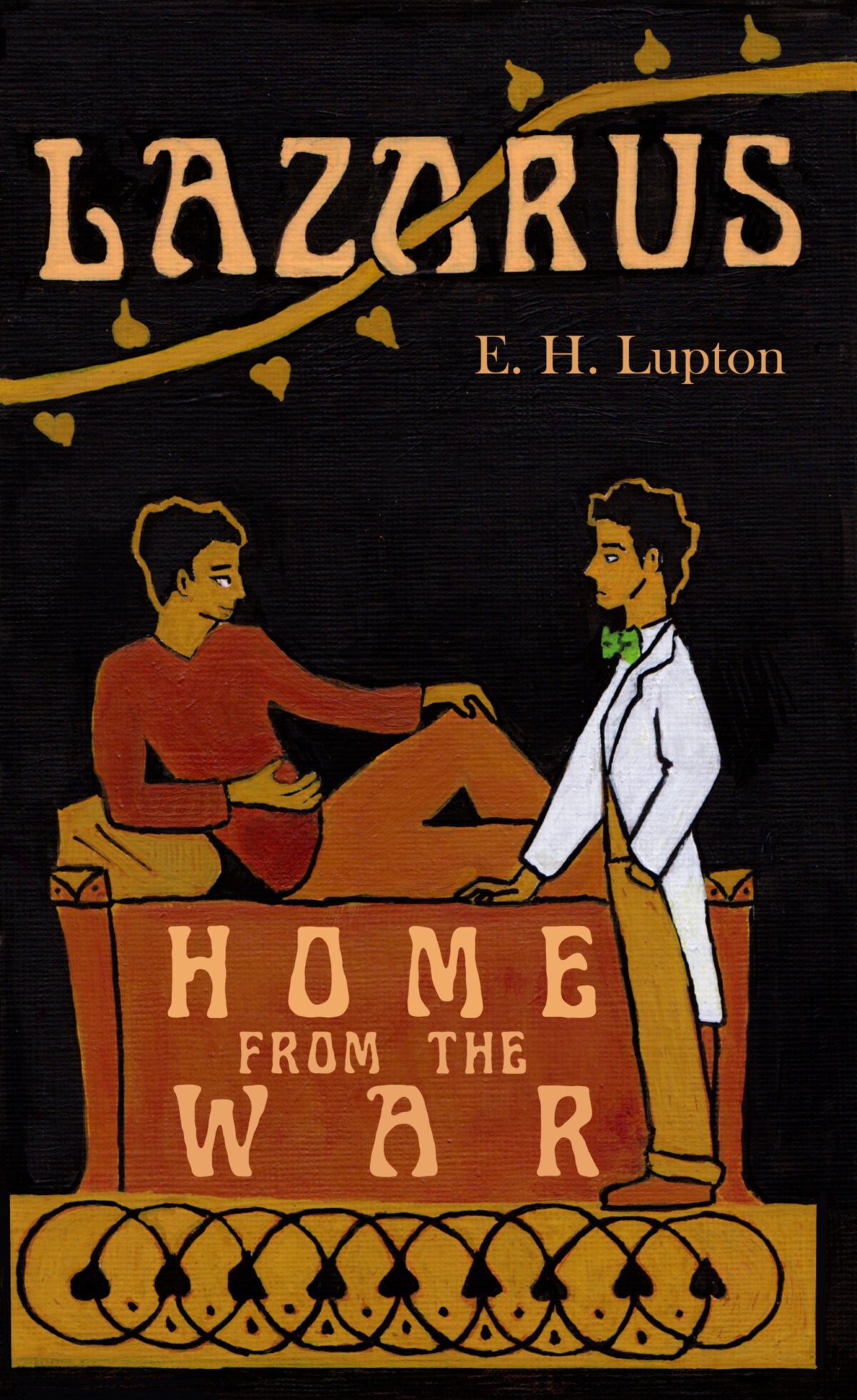
Lazarus, Home from the War is out!

So first off, today is the day that Lazarus, Home from the War comes out! I’m very excited. You can find the book on all the main sites here, on itch.io here, or on my website here. It’s on Goodreads here. For those looking to order the paperback through your local stores, that should be available to order now or very shortly using the ISBN, which is 979-8988394433.

Second off, today is Hmong-Lao Veterans Day in Wisconsin. I just found this out yesterday! The Hmong were deeply involved in the Vietnam War and came here as refugees afterward, so I wanted to commemorate this, given the topic of the book.

Now, for those with longer attention spans or nothing better to do, a little essay.

LHftW is a very personal book in a lot of ways. I lived in Vietnam for a year and I have a master’s degree in Southeast Asian studies, so I have a weird and probably outsized attachment to the whole region. But my connection to VN goes farther back than an impulsive decision I made in college. 

(What, you didn’t decide on impulse to move to Ho Chi Minh City?)

When I was in college as an undergrad, I lived for several years at the corner of Bassett Street and Dayton, a block from the Mifflin Street Co-op. Mifflin Street was the originating location, in 1969, of the Mifflin Street Block Party, a political protest cum bacchanal that was where former three-time Madison mayor Paul Soglin got beaten by the cops and arrested. Or a place. These things as facts are all very well and good—and living in the area, I was relatively aware of them—but why choose Mifflin Street for the party?

Basically, this area was the heart of the hippie student neighborhood during the 60s/70s, and thus the heart of the antiwar movement in Madison. At some point, and I can’t quite work out the timing (except that it was before 1975), Bassett was nicknamed Ho Chi Minh Trail. I have no idea if this was a self-given title, or a bit of anti-anti war-movement vitriol; nevertheless, the locals embraced it, and put up a street sign.

Before I knew this was a real, actual street sign, my editor and I discussed whether the nickname was a dog whistle, and I removed a reference to it from the final version of Dionysus in Wisconsin because it was too difficult to explain all of this in passing. But I’ve since had it confirmed, not just by the photographs, but by long-time Madisonians as well.

In June 1975, following the fall of Saigon, the city council rejected an attempt to rename the street permanently “in a spirit of reconciliation,” and the sign came down.

(Click here to view a photo of the street sign and a newspaper article on Facebook.)

I still find the whole thing fascinating. But it’s also emblematic of how the US’s relationship with Vietnam has for many years been mediated by the war. I went to HCMC more than a decade after Clinton normalized relations with the country, and it was still such a part of the collective memory in the US that this fact—”Bassett used to be called Ho Chi Minh Trail”—was the main thing I heard from my peers when I announced I was going. (Maybe that says something about who I was hanging out with, too.)

Interestingly, learning about the war for the first time mostly from the Vietnamese side of things, where it’s often referred to as the Resistance War Against America, gave me a view that I now often see echoed in online discourse about it–that it was really a war fought between the United States and Vietnam. This was not, on the whole, a common view at the time–if anything, it was perceived to be not a war between South and North Vietnam that was not the US’s war to fight. It was also not the view of the South Vietnamese who came to the US as refugees. It’s interesting how the rhetoric has shifted.

That said, Vietnam is an amazing country. And so is Thailand, my other love, where Laz has also spent time. A few years later, after I’d been back in Madison for a while, I went back to school for library science and wound up also getting an MA from what was then called the Department of Languages and Cultures of Asia, wherein I mostly studied Thai.

So because of my own, uh, checkered past, Laz spent some time hanging around at Than Son Nhut (a base on the edge of Saigon, actually not far from where I used to live) flying Jolly Green Giants (search and rescue helicopters) before getting sent to a base in Northern Thailand, where he flew other things (the RF-4C Phantom, mostly) and also did some light espionage hung out with a monk he met.

And then he comes home, which is really where the novel begins. I can’t say anymore, because of spoilers. But I hope you’ll enjoy reading it as much as I enjoyed writing it.

I’ll catch you at the beginning of June with my normal newsletter!

On Paula Deen

That's "HA-yam," y'all.

One of the things that interests me about Paula Deen’s recent revelation that she has diabetes (and is now a spokeswoman for Novo Nordisk) is how personally people seem to be taking it. A number of people on my friends’ list on Facebook (I know, the source of all truth) seemed very upset and seemed to view her diagnosis as comeuppance for the way she lives her life/cooks. Anthony Bourdain, who can always be counted on to say something mean if he is allowed to speak, calls her cooking habits “in bad taste” in light of her diagnosis. A number of people have implied that by cooking dishes with high quantities of butter, sugar, and salt, she was somehow intentionally raising the diabetes rates in this country so that she and Novo Nordisk could cash in.

Well, perhaps that’s a bit drastic as a characterization, but I have to say I’m surprised for two reasons:

  1. Her cooking is, I think, getting slammed unfairly.
  2. These rants very much absolve her viewers/followers of personal responsibility. If someone got diabetes from cooking a la Paula Deen every day, “It’s not your fault, Paula Deen said it was okay.”

I have to admit I’m a bit of a cooking show junkie, so when I say this about point #1: Paula’s meals are quite fattening, but overall I don’t think the so-called “Queen of Butter” uses more butter than Julia “Butter is Better” Child ever did. In fact, while it’s true that Paula never met something she couldn’t deep fry, Julia certainly matches her with butter, heavy cream, and wine. The major difference between the two of them is in the sophistication of their cooking—Paula Deen gets paid to cook “traditionalesque” southern food, while Julia Child was doing French.

Put this way, the opposition to Paula Deen’s method of cooking smacks of snobbery. It’s okay to use cream and butter if you’re making quiche—Julia’s recipe calls for over two cups of cream, as it happens (a mere 1,642 calories—as Julia once said, “If you’re afraid of butter, use cream.”)—but if you’re making Twinkie Pie, go to hell (for the record, Twinkie Pie uses neither cream nor butter). Of course Julia Child practiced portion control (she talks about it in her book My Life in France, anyway; I don’t think I’ve seen her mention it on her show). Oh, but Paula Deen says she doesn’t suggest anyone should eat the way she cooks every day (or she’s said that in interviews, again I don’t think I’ve seen her mention it on her show). But certainly I think it’s difficult to tar one of them on this count without hitting the other.

As for the second point, well… There is the matter of personal responsibility, certainly, and freedom of thought. I rarely make a recipe without halving the sugar, replacing some butter or oil with margarine or yoghurt, and generally trying to lighten things up. (I make béchamal sauce with skim milk. Julia would be ashamed to be in the same room with me.) But my point is that no one is forcing anyone to make Deen’s recipes or to make them as written. If we are going to claim that cooking as she does is somehow irresponsible, then can we follow it by saying it is irresponsible for a restaurant to serve fried cheese curds (a Wisconsin favorite) to an obese person (there are plenty here)? Don’t people have a right to make their own choices on what they eat? In fact, isn’t this one of the earliest rights that people claim for themselves as children barely removed from infancy?

One thing that struck me as interesting about all these interviews Deen has done is that she mentioned that initially, she didn’t really understand what diabetes was or what it meant that she had it. Recall that we are talking about a woman who grew up in a small town in the South, a place that does not have an awesome educational system, and she did not go to college. I know about diabetes because my mother is an endocrinologist. It’s possible that Ms. Deen did not grow up with these privileges and actually didn’t know, or at least didn’t understand, that this could be the outcome of her lifestyle. From my understanding, it is not unusual for people to go through a period of adjustment and denial when diagnosed with diabetes. Plus, people should be allowed to keep their medical problems to themselves, even if they are public figures.

That said, signing on as spokesperson for Novo Nordisk is opportunistic. I have to admit I don’t like drug companies (because of patenting issues, primarily—I’m not a conspiracy theorist). But it may be the case that she genuinely thought she could help reach out to her audience—people who, like her, may not know much about diabetes—and educate them. And make a tidy sum in the process; she’s a shrewd businesswoman. But I don’t think anyone, least of all Deen herself, is suggesting that with diabetes you can do what you want, then take a pill that makes it all better. Novo Nordisk is suggesting that they approached Deen because they thought it could be cool “to change some of her famously tasty, and butter-rich, and really unhealthy recipes.”

I won’t imply that all cooking shows are created equal when it comes to matters of health, but look at some of the things on Food Network’s lineup:

  • Diners, Drive-ins, and Dives: The overweight Guy Fieri goes from place to place and is filmed stuffing his maw with giant piles of meat, cheese, and fried things.
  • Sugar High: Duff Goldman, much as I love him, is another chubby guy carting from place to place EATING, in this case, CAKE.
  • Hungry Girl: Lisa Lillien really rubs me the wrong way. Never has “healthy” eating seemed less appealing (probably because instead of cooking genuinely healthy food, she takes all kinds of shortcuts so people can still eat their greasy terrible meat by-products without the guilt).
  • 30 Minute Meals: Rachel Ray has a terrible smile, and smiling terribly is all she’s good at. But although her food doesn’t seem awful, she doesn’t exactly cook with the precision needed for really healthy cooking. Know what’s the difference between one tablespoon of “EVOO” and three? About 240 calories. That’s the difference between measuring things and approximating.
  • Pioneer Woman Cooks: Ok, I happen to like Ree Drummond, and I have cooked stuff off her website…usually cutting the sugar and butter by quite a lot. She lives on a cattle ranch and never met a stick of butter she didn’t love.
  • Robert Irvine: I only ever see him on Dinner: Impossible, and most of what he does is yell at people. I’m just pointing him out because he’s the only really ripped chef. In the world.
  • Sandra Lee: While Sandra’s Money-Saving Meals is usually fairly healthy, Semi-Homemade sacrifices that for convenience. And while she’s willing to cut calories in food, she spends them on alcohol. I’m convinced she’s not fat only because she doesn’t eat and lives on breath mints and water when she’s not being cryogenically frozen prior to her next taping.

And looking at non-Food Network cooking shows I’ve enjoyed:

  • Two Fat Ladies: Exactly what it sounds like. Two fat, elderly women drink and smoke their way across England on a motorcycle, cracking nasty jokes about vegetarians all the while. I love it.

So what’s my point? First of all, it’s not unusual for cooks to be both personally rotund and cook unhealthy food. Second of all, this industry is ALL ABOUT cashing in on people’s love for highly caloric, fried, cheesed, delicious food. Third, Paula isn’t alone in cashing in on the latest health scare: FN announced a new series called Fat Chef which premiers 26 January. I can only assume that this is a less abusive version of Biggest Loser.

Finally, to blame Paula Deen for advancing the cause of diabetes through her cooking is to miss the whole tragedy of the cooking show. While record numbers of people are overweight, and cookbooks sell well and cooking shows are super popular, most of these people don’t cook. As Michael Pollan puts it, the Average American spends 27 minutes per day on food preparation, and cooking from scratch is all but dead (officially, “cooking” means you have to assemble elements—heating up a pizza, for example, doesn’t count, though making a sandwich does). That makes me a statistical anomaly, since I cook from scratch (I make sauces! I bake things without mixes! I make non-instant rice and lentils!) at least 3-4 times per week. People are not getting fat off of Paula’s deep-fried ham (or haa-yam, y’all) because they are not cooking it. They’re watching her cook, then having dinner at McDonald’s.

So rage against Paula Deen all you want. Unfortunately, it’s not going to help anything.